

Getting Kids Ready for Sports Season: An Injury Prevention Guide
TLDR
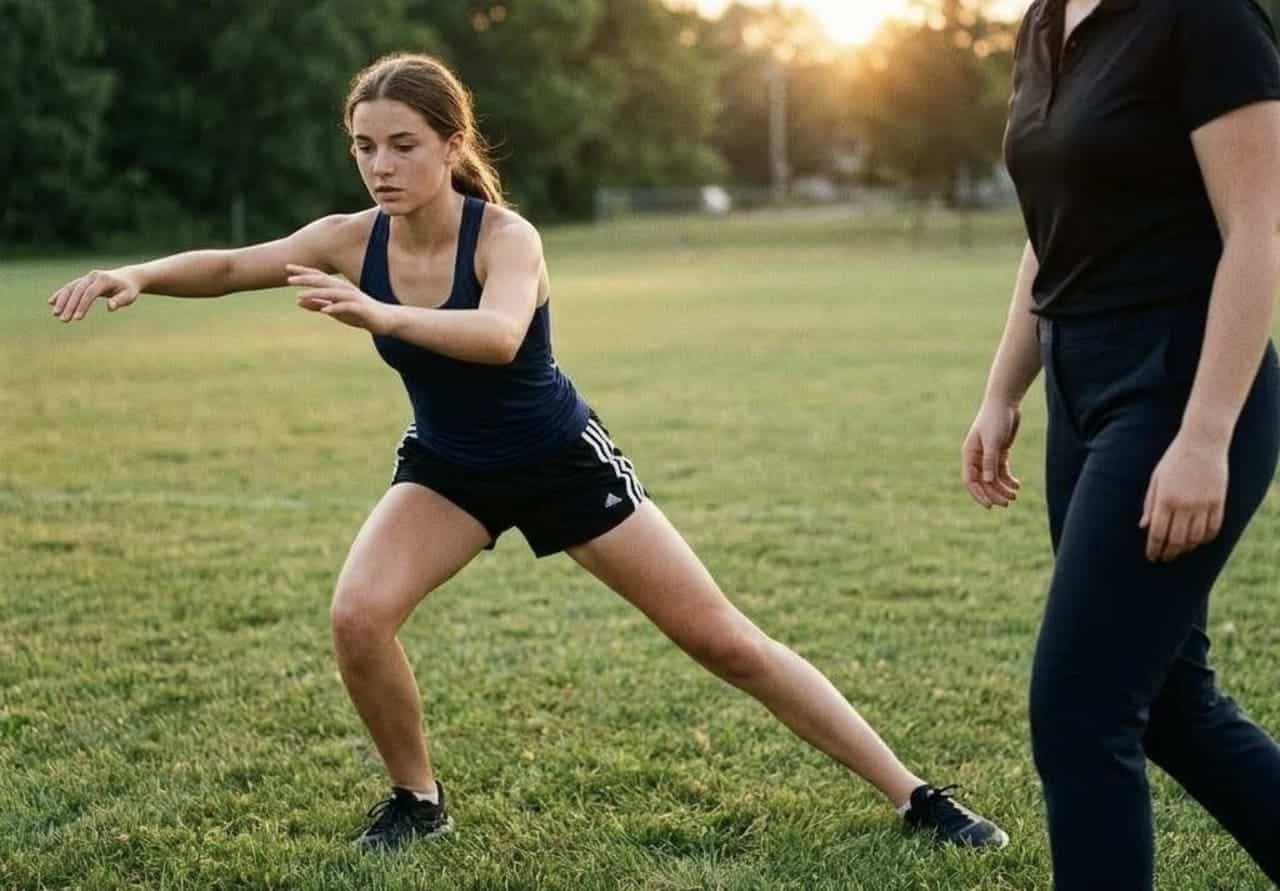
Dynamic warm-ups, balance training, and neuromuscular control exercises done 2–3 times per week, starting 4–6 weeks before the season, are associated with a 30–50% reduction in common sports injuries like ACL tears, ankle sprains, and shoulder problems in young athletes. These exercises are not complicated, and starting early gives your child's body time to adapt to the physical demands of sport. This guide walks through exactly what to do and why it matters.
Sport Season Is Coming. Is Your Child's Body Ready?
Every fall and spring, young athletes across Calgary go from summer or winter activities straight into full-speed practices, tryouts, and tournaments. Soccer, basketball, hockey, volleyball, baseball, lacrosse — the season picks up fast. Within the first few weeks, the demands on a young body rise sharply: more running, cutting, jumping, throwing, and contact than they have been doing for months.
Living close to the mountains, Calgary families have access to a wide range of seasonal sports and outdoor activities. That variety is wonderful, but it also means the shift from skiing or casual outdoor play to structured field and court sports can catch a young body off guard. Surfaces change, footwear changes, and training volume increases quickly.
This guide is about giving young athletes a genuine head start. Not by working them harder, but by preparing their bodies to move with better control, balance, and coordination before the season begins.
Why Does Preseason Preparation Matter?
Going from lower activity levels to intense training places real stress on joints, muscles, and connective tissue that have not been regularly loaded in sport-specific ways. This rapid increase in demand is one of the most consistent contributors to early-season injuries in youth sports.
Several factors raise injury risk during this period:
- Growth spurts that temporarily affect coordination and strength
- Reduced balance and joint stability after time away from sport
- Habits of landing, pivoting, or cutting that have not been practiced with good mechanics
- Previous injuries that were not fully rehabilitated
- Doing too much too soon without a gradual build-up
Getting in shape and being prepared for sport-specific movement are not the same thing. A child who runs regularly is not automatically ready for the lateral cuts, quick pivots, and overhead throws that their sport demands. Preseason neuromuscular training for athletes bridges that gap in a structured, progressive way.
What Is a Dynamic Warm-Up and Why Does It Matter?
A dynamic warm-up uses controlled movement to raise body temperature, activate muscles, and rehearse the patterns a sport requires. Unlike static stretching, where you hold a position for 20–30 seconds before activity, a dynamic warm-up prepares the body to move in the ways it is about to be asked to move.
Static stretching before activity is not harmful, but research and practice consistently support dynamic warm-ups as more useful preparation for running, jumping, cutting, and throwing. A good dynamic warm-up for young athletes takes 5–10 minutes and progresses from low to moderate intensity.
Suggested Components
- Light jogging or skipping to raise heart rate gradually
- High knees and butt kicks to activate hip flexors and hamstrings
- Walking lunges to engage the hips, knees, and ankles through full range
- Lateral shuffles to prepare for side-to-side movement
- Carioca or grapevine steps for hip mobility and coordination
- Leg swings forward and sideways to warm up the hip joint
- Arm circles and light banded shoulder activation for throwing or overhead sports
This kind of warm-up is appropriate before soccer, basketball, hockey, volleyball, football, lacrosse, baseball, and track. It signals to the nervous system that sport-level movement is coming, which improves the quality of practice and reduces the risk of early-session strain.
What Is Proprioception and Why Should My Child Train It?
Proprioception is the body's ability to sense its own position, balance, and movement without having to look. It is how your child knows where their foot is when they land, or how their knee is aligned when they change direction at speed. When proprioception is sharp, the body responds to sudden shifts in terrain or contact with faster, more appropriate corrections.
Training proprioception is one of the most practical strategies for ankle sprain prevention in youth sports. Ankle sprains often happen not because the ankle is weak, but because the brain and muscles do not communicate quickly enough when the foot hits an uneven surface or the athlete is bumped off balance.
Suggested Balance and Proprioception Exercises
- Single-leg balance for 20–30 seconds per side
- Single-leg balance with a ball toss to a partner to add distraction
- Balance on a foam pad or folded mat to simulate unstable surfaces
- Controlled single-leg reaches toward targets on the floor
- Hop-and-stick landings, focusing on a quiet, steady landing
- Eyes-up balance challenges that mimic the need to stay aware of teammates and space
Quality matters more than difficulty here. Watch for the knee tracking over the toes, a steady trunk, and a controlled, soft landing. These exercises should not cause pain and should progress gradually from simple to more demanding.
How Do Neuromuscular Control Exercises Reduce ACL and Joint Injuries?
Neuromuscular control refers to the coordination between the brain, nerves, and muscles that governs how the body executes movement. When this coordination is well-trained, an athlete absorbs force through good mechanics, meaning the hip, knee, and ankle are all working together rather than one joint absorbing more than its share of load.
ACL injury prevention exercises for kids focus heavily on this coordination, particularly around landing, pivoting, and deceleration. Research published in PubMed Central on neuromuscular training for ACL injury prevention supports the role of structured programs in reducing injury risk. Physiopedia's ACL injury prevention overview also highlights how training landing mechanics and knee alignment forms the foundation of most evidence-informed prevention programs.
Key Movement Skills to Develop
- Landing with knees aligned, not collapsing inward toward each other
- Bending through the hips, knees, and ankles to absorb force on landing
- Keeping the trunk upright and controlled during movement
- Decelerating before changing direction instead of cutting at full speed without preparation
- Loading both legs evenly during squats and landings
Suggested Exercises
- Squat-to-stand patterning with attention to knee and hip alignment
- Jump-and-stick landings, pausing on landing to check position
- Lateral bounds with a controlled landing before stepping back
- Forward and backward running drills to train acceleration and deceleration
- Cutting technique practice at slower speeds before building to full intensity
These exercises do not need to be exhausting to be effective. Consistency and good form over several weeks build the movement patterns that hold up when the game is fast and unpredictable.
Should Shoulders Get Preseason Preparation Too?
Shoulders are frequently overlooked in youth injury prevention, but they need the same kind of graduated preparation as knees and ankles. Baseball, softball, volleyball, swimming, tennis, lacrosse, and any sport with throwing or overhead movement places significant and repetitive demand on the shoulder joint.
Many shoulder problems in young athletes develop not from a single incident, but from a sudden increase in throwing or overhead volume without adequate preparation. Weak rotator cuff muscles, limited shoulder blade control, and poor trunk stability all contribute. The University of Washington Orthopaedics and Sports Medicine resource on shoulder stability exercises is a practical reference for the foundational movements that support shoulder health.
Suggested Shoulder Preparation Exercises
- Band external rotations to strengthen the rotator cuff
- Scapular rows to improve shoulder blade control
- Wall slides to train scapular movement through range
- Push-up plus to engage the serratus anterior at end range
- Controlled throwing progressions, starting with short distances and low intensity
Throwing is a whole-body movement. Hip strength, trunk stability, and shoulder blade control all contribute to how much load the arm itself has to absorb. Training the shoulder in isolation misses most of the picture.
If your athlete has pain with throwing, reduced range of motion, numbness, or symptoms that do not settle with rest, a physiotherapy assessment is the appropriate next step before continuing.
A Simple 4–6 Week Preseason Framework
This framework is a flexible starting point, not a fixed prescription. The right program depends on your child's sport, age, growth stage, previous injuries, and current movement ability. A physiotherapy assessment is always the most reliable way to build something tailored to your athlete.
| Session Component | Duration | Focus |
| Dynamic warm-up | 5 minutes | Jogging, skipping, leg swings, arm activation |
| Balance and proprioception | 5–8 minutes | Single-leg work, foam pad, hop-and-stick |
| Jumping, landing, or shoulder control | 5–8 minutes | Squat patterning, cut technique, band work |
| Cooldown and mobility | 2–4 minutes | Gentle stretching and breathing |
A Simple Weekly Progression
- Weeks 1–2: Learn the technique slowly, prioritize form over speed or load
- Weeks 3–4: Add sport-like movement patterns and introduce light fatigue
- Weeks 5–6: Increase speed, reaction demands, and game-like context
Watch for warning signs during this period: persistent pain, swelling, limping, repeated ankle rolling, poor landing control, or an athlete avoiding certain movements. These are signals that something needs attention before the season begins, not after the first injury.
Key Takeaways
- Dynamic warm-ups, proprioceptive training, and neuromuscular control exercises done 2–3 times weekly, starting 4–6 weeks before the season, are associated with a 30–50% reduction in ACL tears, ankle sprains, and shoulder injuries in young athletes.
- Getting fit and being prepared for sport-specific movement are different things. Young athletes benefit from practicing the specific mechanics their sport requires, including landings, cuts, pivots, and throws.
- Dynamic warm-ups prepare the nervous system and muscles for sport movement more effectively than static stretching alone before activity.
- Proprioception training improves the speed and accuracy of the body's balance responses, which is especially important for ankle sprain prevention during rapid direction changes and uneven landings.
- Neuromuscular control training teaches athletes to land, decelerate, and pivot with better alignment, reducing the mechanical stress placed on the ACL and surrounding structures.
- Shoulder preparation is essential for any sport involving throwing or overhead movement, and should progress volume gradually to allow the rotator cuff and shoulder blade muscles to adapt.
Ready to Build a Plan Tailored to Your Athlete?
You do not have to piece this together on your own. If your child is getting ready for sports season and you want to know which exercises are right for their sport, age, and movement history, a proper assessment makes all the difference.
At Maximum Potential Physiotherapy in Calgary NW, we take the time to assess how your athlete moves, listen to your concerns, and build a plan that fits their goals and their sport. We equip young athletes and their families with practical tools they use well beyond the clinic, so they head into the season with better body awareness and more confidence in their movement.
Book a physiotherapy assessment for your child today and give them a strong, well-prepared start to the season.
Frequently Asked Questions
How early should my child start injury prevention exercises before sports season?
Starting 4–6 weeks before the season gives enough time to build motor patterns and movement control progressively. If the season has already begun, it is still worthwhile to add consistent warm-up, balance, and movement-control work into your child's routine. Starting late is better than not starting at all.
Do these exercises guarantee my child won't get injured?
No exercise program eliminates injury risk entirely. What the research shows is that consistent neuromuscular, balance, and dynamic warm-up training is associated with a meaningful reduction in the likelihood of certain injuries when done properly and progressively. The goal is better preparation, not a promise of a perfect season.
Should my child do these exercises if they already have knee, ankle, or shoulder pain?
If pain is already present, it is worth having the athlete assessed before starting or progressing any exercise program. A physiotherapist can identify what is safe to load, what needs modification, and when your child is ready to return to full sport participation without increasing risk.
